































Egypt Plans Sovereign AI Factory and Major Data Centre Expansion
Egypt is expanding its AI infrastructure through a sovereign AI factory and large data-centre project involving Vodafone, Cassava Technologies and Elsewedy Electric.
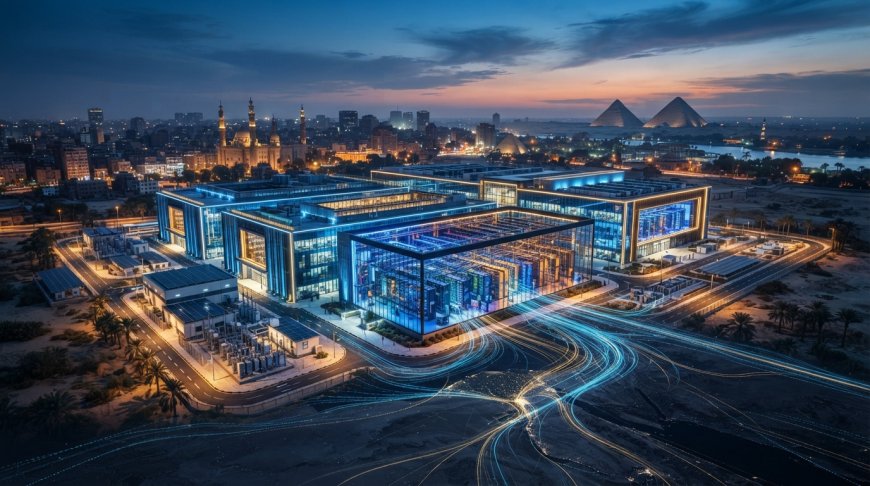
Egypt is making a major push to strengthen its position in Africa's artificial intelligence and data infrastructure race through new partnerships involving Vodafone Business, Elsewedy Electric and Cassava Technologies.
The initiatives include plans for a large-scale data centre operation as well as what the partners describe as Egypt's first national sovereign AI factory.
The announcements highlight an increasingly important part of the global AI competition: countries are no longer focusing only on software and AI models. They are competing for the computing infrastructure required to actually run them.
Africa Data Centres Egypt
Vodafone Business, Elsewedy Electric and Cassava Technologies have partnered on the development of Africa Data Centres Egypt.
According to information released by Egypt's State Information Service, the initial phase is expected to provide approximately 20 megawatts of capacity over three years, with plans for the project to eventually scale significantly further.
The Egyptian government says initial foreign investment could reach approximately $200 million, while the longer-term development has been projected to potentially reach substantially higher levels if fully completed.
Those larger figures represent future targets rather than existing operating capacity.
Egypt's First Sovereign AI Factory
A separate partnership between Vodafone Business and Cassava Technologies is focused specifically on artificial intelligence infrastructure.
The companies plan to establish what they describe as Egypt's first national AI factory, allowing advanced AI workloads to be hosted and processed locally.
The infrastructure is expected to use NVIDIA accelerated computing technologies and provide GPU-based computing capacity for organisations developing and deploying AI systems.
The idea behind sovereign AI infrastructure is straightforward: instead of relying entirely on computing resources hosted outside a country, organisations can process sensitive data and run important AI workloads within national borders.
Why Data Sovereignty Matters
As governments and companies adopt artificial intelligence, questions about where information is stored and processed are becoming increasingly important.
Banks, healthcare organisations, governments, telecommunications companies and other highly regulated industries may handle sensitive information that cannot always be freely transferred across borders.
Local AI infrastructure can potentially provide greater control over:
- data residency;
- regulatory compliance;
- security;
- computing availability;
- latency;
- national digital infrastructure.
It can also help countries develop domestic AI ecosystems rather than relying exclusively on foreign cloud regions.
Africa's AI Race Is Becoming an Infrastructure Race
Much of the global discussion around artificial intelligence focuses on models such as ChatGPT, Claude, Gemini and DeepSeek.
But these systems depend on enormous computing infrastructure.
Data centres, electricity, GPUs, high-speed connectivity and cloud infrastructure are becoming strategic resources.
For African countries, this presents both a challenge and an opportunity.
The continent has significant AI talent and rapidly growing digital economies, but large-scale access to advanced computing remains uneven.
Countries capable of providing reliable power, modern data centres and affordable GPU infrastructure could attract startups, multinational companies, researchers and government AI programmes.
Egypt clearly wants to position itself as one of those countries.
What This Means for Nigeria and Other African Markets
Egypt's infrastructure push also raises broader questions for other major African economies.
Nigeria has one of Africa's largest startup ecosystems and enormous demand for digital services, while South Africa, Kenya and several other markets are also expanding cloud and data-centre capacity.
But the next stage of competition may increasingly depend on more than traditional hosting.
Countries could compete around:
- availability of AI accelerators and GPUs;
- affordable electricity;
- sovereign cloud infrastructure;
- local AI research capacity;
- data protection regulation;
- connectivity;
- incentives for AI companies.
For Nigeria in particular, the opportunity is significant because of its large population, fintech ecosystem and growing community of AI developers.
However, power availability, infrastructure costs and access to high-performance computing remain important constraints.
A Different Kind of AI Leadership
Africa does not necessarily need every country to build its own frontier large language model.
There is also strategic value in providing the infrastructure on which AI companies, governments and researchers can build.
Egypt's new partnerships demonstrate that the African AI race may increasingly involve compute sovereignty as much as software innovation.
As investment in artificial intelligence accelerates globally, countries able to provide secure, local and scalable computing capacity could gain an important advantage in attracting the next generation of AI businesses.
For African technology ecosystems, the question is therefore expanding from:
“Who is building AI?”
to:
“Where will Africa's AI actually run?”